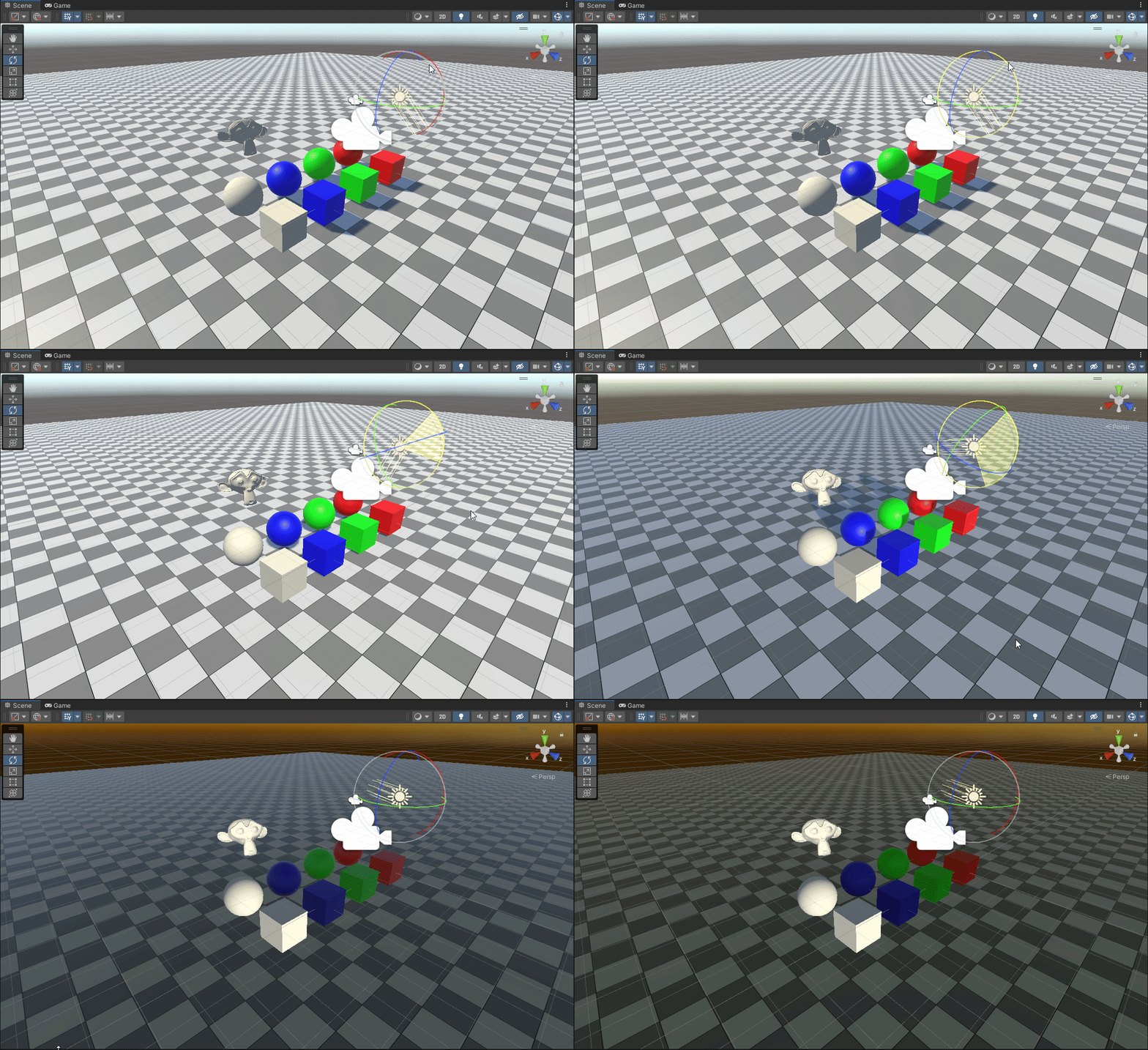

Dichotomy Board Game
Dichotomy is a turn-based competitive board/strategy game that could be played between 2 to 6 players in which players make choices at each step, taking into account the behavior of the other players. To win the game, good strategy with the factor of luck must be present together. The game can be played at different difficulty levels depending on the preference of the player group.
Disclaimer: The game draft is in the hypothetical phase. As it has not been tested, it may contain unforeseen logical problems or imbalanced cases.
Setup
The game space is created through combining hexagonal cards (module or dichotomy cards) to form a big hexagon form (map or board). Dichotomy cards are arranged randomly on the hexagonal game map. This condition introduces the factor of luck and creates an slightly different variation for each game. Map size is adjusted to include 13 module cards on the diagonal. Each session is aimed to last between 25-40 minutes to avoid the game becoming repetitive and overwhelming.
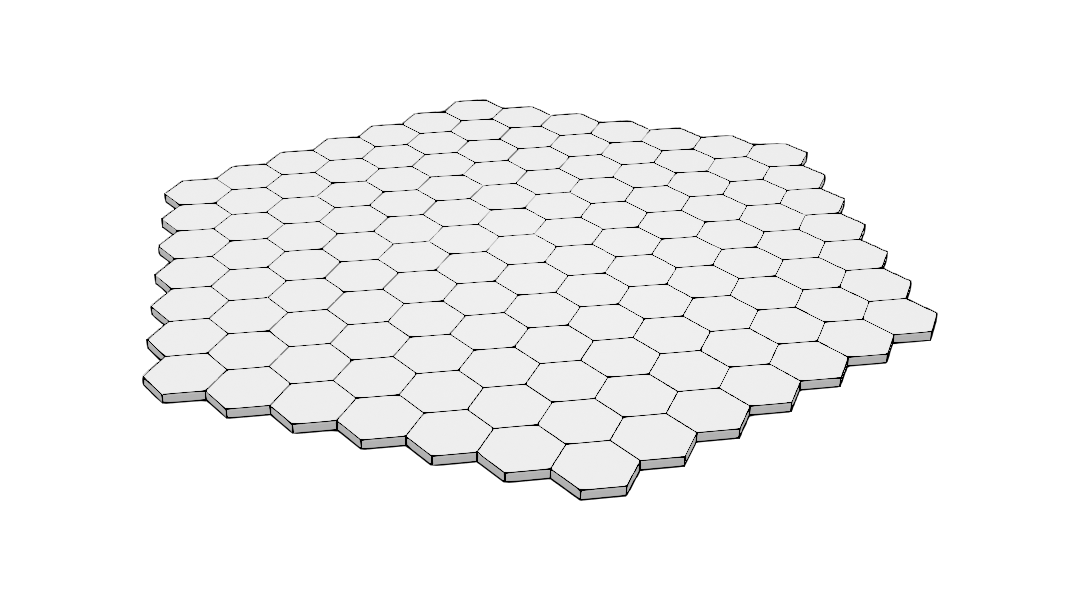
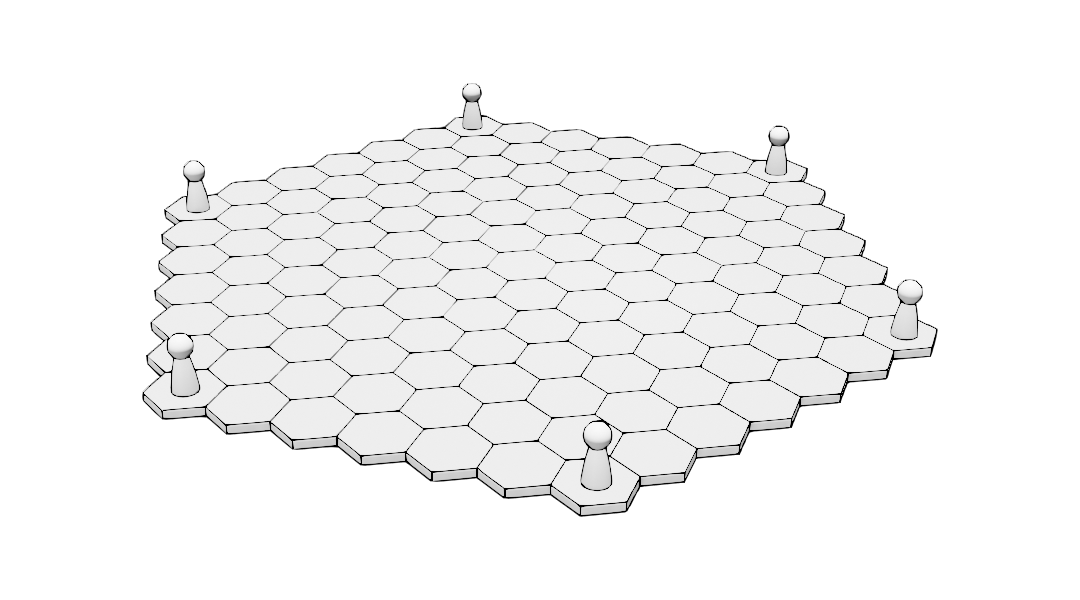
Each player starts on a corner of the hexagonal map. Players’ positions relative to each other are positioned so that they are uniformly distributed across the game board.
Mechanics
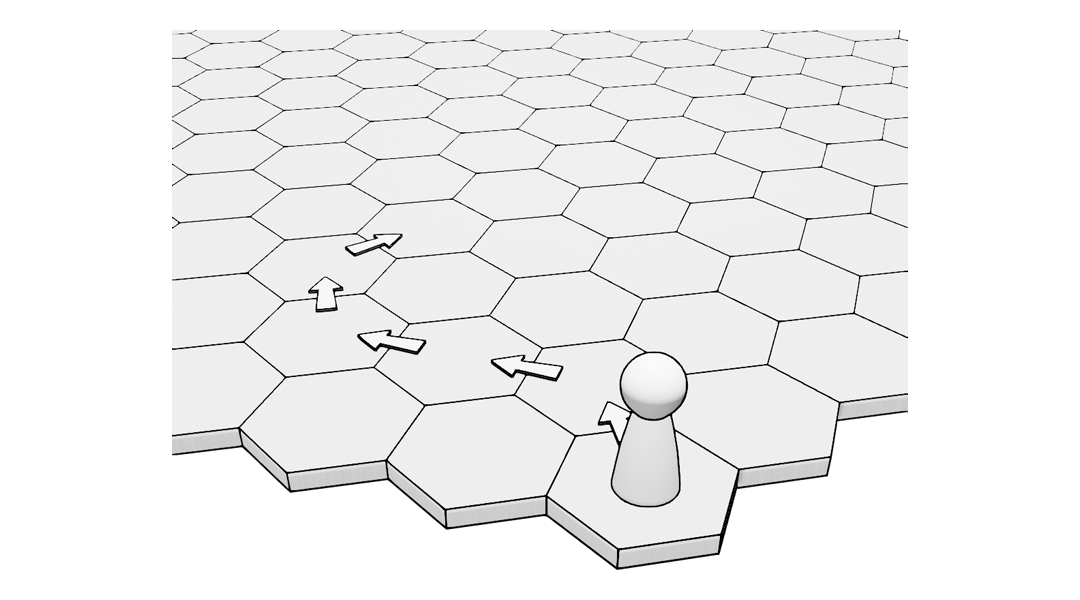
Each player starts the game with five basic stats. These are Health, Hunger, Stamina, Strength and Speed. Dichotomy cards show the player’s position on the map. Only one player can be on a card at a time. Rotating on clockwise, players move by choosing one of the cards adjacent to their current dichotomy card. Each dichotomy card gives one negative and one positive property, e.g. +1 speed, -1 hunger. Players have stats that affected by dichotomy cards.
| Icon | Stat | Limit | Description |
|---|---|---|---|
 | Heal | 6 | Allows to player endure bad conditions if reaches zero, player dies. |
 | Hunger | 6 | Decreases one on each step if reaches zero player dies. |
 | Strength | 4 | Power of player to handle encounters. Either against card or players. |
 | Stamina | 4 | Decreases one on each step. If zero player must one turn to gain. |
 | Speed | 3 | Determines how many tiles player could move at once. |
Tracking player stats Each player gets a player card that has slot for cardriges of each stat. As player moves on the dichotomy card, one applies the stat changes on their card by giving/taking color distincted stat cardridges. Player cannot fill more than maximum amount of the stat. Each player should explicitly show their stat cards to other players.
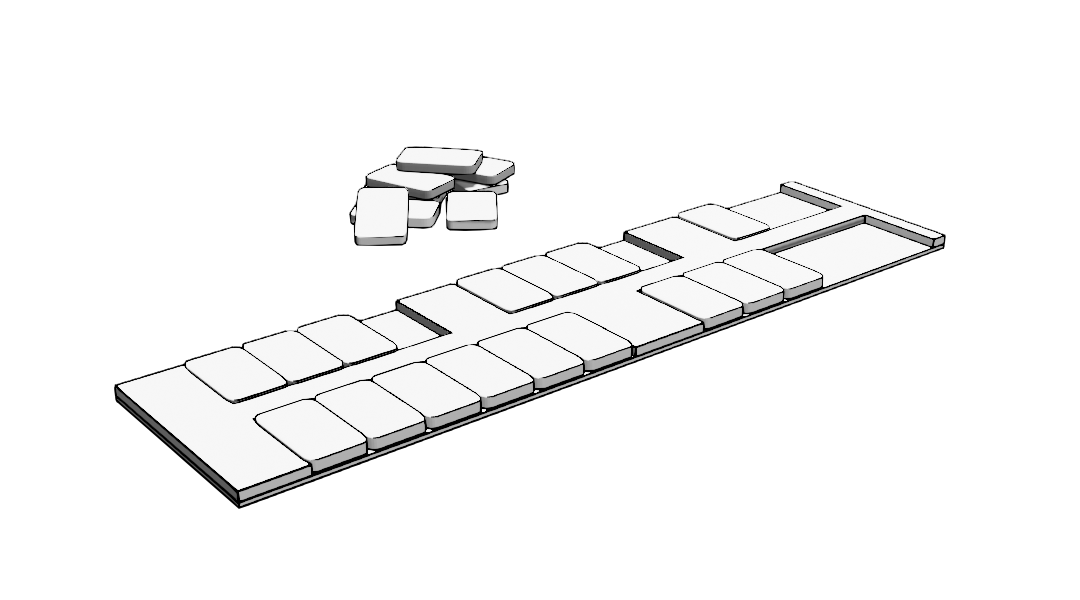
The game can be won in more in various ways
- By eliminating all the other players
- Reaching the safe zone in the middle
- By visiting 3 players starting place and acquiring their spawnstones.
Dichotomy Cards are step-over decisions that affects player stats. It contains minimum 3 basic information. These are: name of the card, positive aspect, and negative aspect.
Dichotomy Card Levels There are three groups of dichotomy cards distinguished by color. These groups are there to prevent players from moving around the map with uniform ease, and to create some alignment rules to prevent randomization from creating cul de sac situations that players lose at the early game. In other words, randomization is intended to introduce the factor of luck into the game, whereas alignment rules are there to prevent chance of being the dominant factor and overriding the player’s decisions.
| Color | Level | Desciption |
|---|---|---|
| Green | Easy | Regular trade-off |
| Yellow | Medium | Unfair trade-off |
| Orange | Hard | Extremely unfair trade-off |
Step over preventation The card the player steps on is flipped over and grayed out. This card loses its effect until the player exits the adjacent cards. At the end of each round the non-adjacent cards are reactivated. In order to win the game, the player needs to create a progressive strategy by balancing their stats on the maps and reading the actions of the other players.
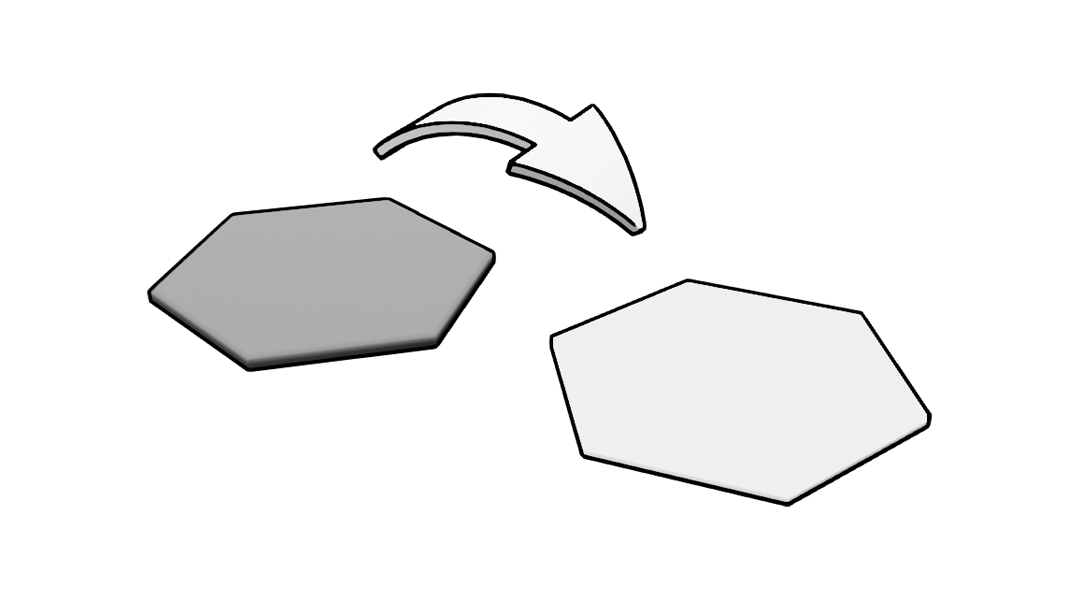
Dichotomy Card Examples
| Name | Positive Aspect | Negative Aspect |
|---|---|---|
| Hunt | +1 Hunger | -1 Stamina |
| Stay | +1 Energy | -1 Hunger, No movement |
| Training | +1 Strength | -1 Stamina, -1 Hunger |
| Teleport | -2 Energy, -1 Speed | Move to desired location |
| Portal | -1 Energy, -1 Hunger | Move to designated location (other portal) |
| … | … | … |
- Variations of dichotomy card is to be added considering the balance to extend the complexity of game.
Player versus Player Player could attack and kill other players. To hit another player, target player should be in the attack range by the player. Attacking another player costs 1 hunger and energy equal to players strength. If attacker players energy lesser than his/her strength, then player hit strength is regarded equivalent to as his/her stamina. Hit amount is decreased from attacked player’s health. If it the health of attacked player reaches zero. Attacked player dies and attacker takes the position of attacked player, otherwise positions stays same.
Modes and Variations
-
Complexity Level 1:
- There are certain single-use items added on the map with some rules. That enhances the stats extensively beyond limits, or provides unique abiltiy
- ex. bow, bicycle etc.
-
Complexity Level 2:
- Players have a technology tree and materials among map to create items in complexity level 2.
- ex. Research cooking, weapon craft
-
Immortal mode:
- the killed player reborns on starting zone. Loses his collected spawnstones
Story
In a post-apocalyptic world, there is scarce of sources to accommodate all. Survivalists compete against each other against each other to live.
Theory
The statement decisions comes with trade-offs holds the subtle message of this game. One of the principles that I have adopted in the late stage of my life as I have learned through experience. I encounter often the falsification about the perception of the concept of decision. As it to be regarded something to gain but at the same time not to lose. A decision, choosing one of the two or more options. It opens up a new path, but it also means that other paths are closed. It might seem about a cruel reality. Yet it bear an austere elegance and beauty because decisions are the mere qualities of character that describes who we are. Accepting the responsibility of two-sided condition of a decision not only make us more mature but progress as a being. As a result, the game aimed to express the statement in an entertaining way.
References and Credits
Visual References
- All figures in the article produced by the author.
- Icons used in Table 1 is from Shikashi’s Fantasy Icons Pack. Images are manipulated by the author.
Used Assets
- Shikashi’s Fantasy Icons Pack. n.d. Accessed (25-Jan-2023) https://cheekyinkling.itch.io/shikashis-fantasy-icons-pack
Used Sources
- Blender Hand Drawn Shader Tutorial. Littlerolz - Youtube [Video File]. 2019. Accessed (19-Jan-2023) https://youtu.be/YDHGm1W0A-c
- Hexagon World with Geometry Nodes Fields - Blender 3.0 Tutorial. Erindale - Youtube [Video File]. 2022. Accessed (19-Jan-2023) https://youtu.be/EboNtLKn_m8
Used Programs
- Adobe Photoshop CC
- Blender 3.4.1
Swapfold
Description
Swapfold is a single player origami puzzle/storyline-rpg mix top-down platformer game with a unique fundamental feature. Players must replicate actions on real world in order to find some solutions to puzzles. The main idea of the game to establishing a ground to show that games has potential as an environment to be a platform of education. On the completition of the game player should be able to learn few origami pieces through the method of associative learning.
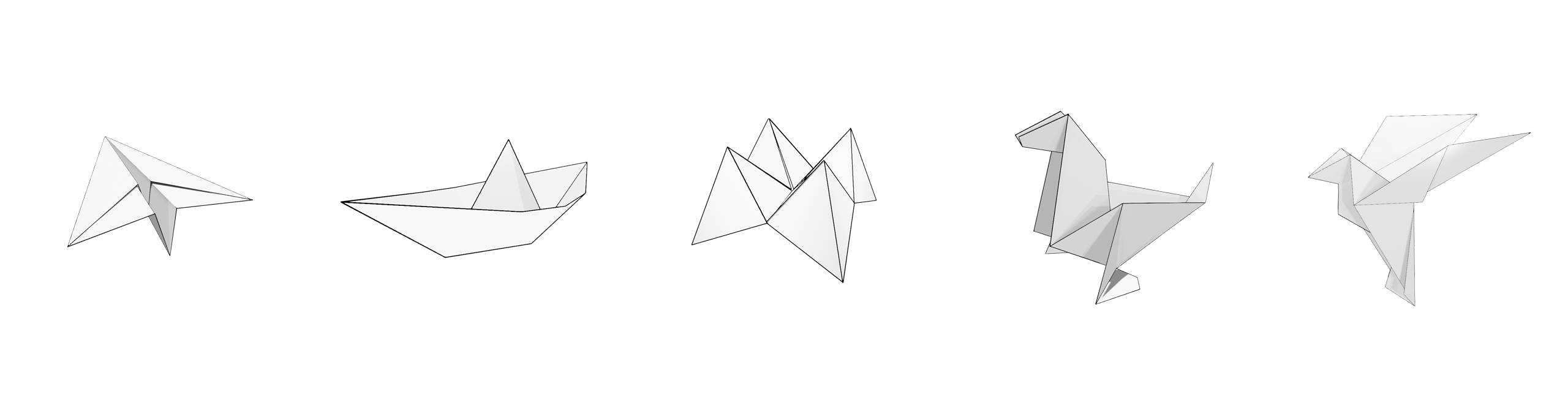
Base Gameplay
Gameplay starts with a simple platformer game with moving around and exploring the world. With a simple mixed combat and puzzle feature for complex spells. Like a cookbook analogy in programming our character learns simple unitary modular folding techniques to create simple origami pieces, each of which associated with a power word, that could be used combine and casts spells ingame. This techniques progresss further on a skill tree. It is aimed that the skill tree also resembles what player learned in real life as well. On each chapter player requires to create an origami piece. Writing a mark on number on each fold. At the end opening crafted origami piece on 2D reveals a map on how to solve a puzzle in game.
Each power word is associated with a folding technique. Player uses keyboard shortcuts to cast power words. Spells are usually combination of (usually 3 or 4) few power words. In RPG combat player must cast spells. A complex set of power words represent portals as well as origami pieces.
Each power word is learned through a simple puzzle.
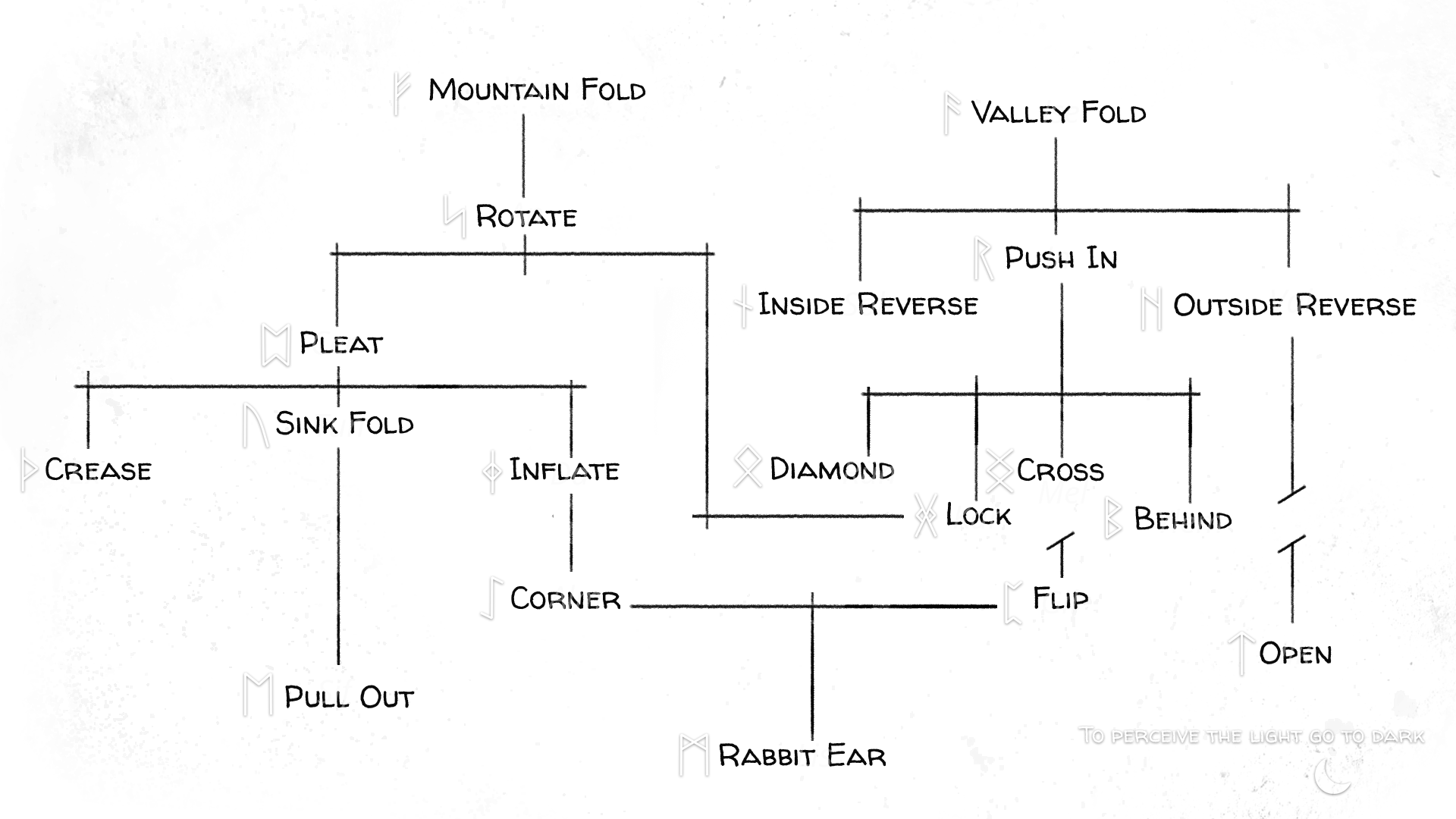
(hint: try dark mode)
Mechanics
Basic game mechanics is a adjusted combination of two main mechanics. Those are moderate paced, environmentally interactive top-down RPG game play and puzzle solving.
Spell Word Combinations
Each spell is combination of one or more power words. During RPG combat, player uses the combination of power words through button combos to cast spell to overcome challenges. This combinations further helps player to solve puzzles through replicating origami pieces in real life.
Example systems in real games (Ultima Online, Skyrim, Magicka).
Progressive Casting
Casting a spell requires a small amount of time. Each cast process has three periods. Those are: fizzle, success, excession. With the analogy of cooking, fizzle states represents a failing cast. If player ends casts too early, spell fizzles, simply fails without any effect. After the end of fizzle, success period begins. During success, effect of spell increases exponantially until until excession period. The latest stage of the cast is excession period. Excession state is guaranteed failing cast and harms the player depending on the combination of spells. The harm is maximum at start and decreases parabolically up to half of maximum success effect.
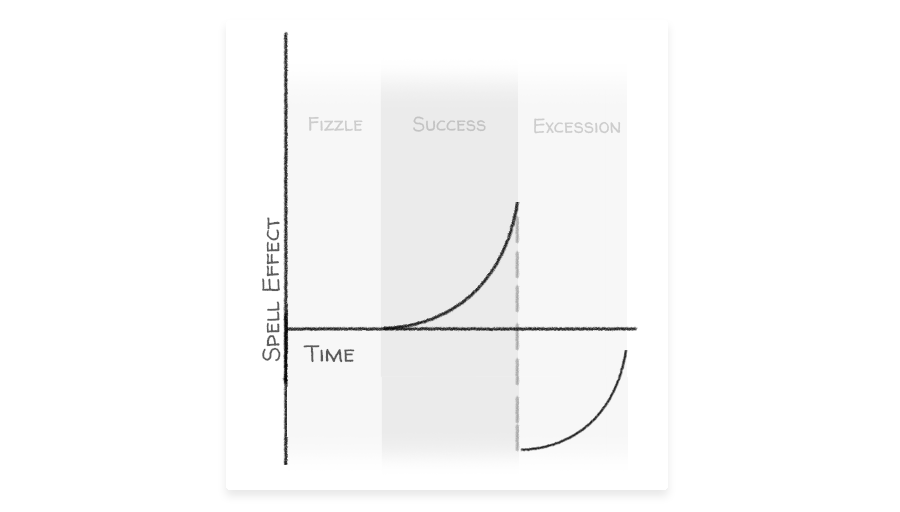
On the combinations, different power words affect the cast time and proportions of the cast periods. Along with the mastery and usage frequency of the player. Through the mix of spell word combination and progressive casting, it is aimed to create create precision input button combos, fun to play but hard to master base combat mechanics of the game.

Real World Replication
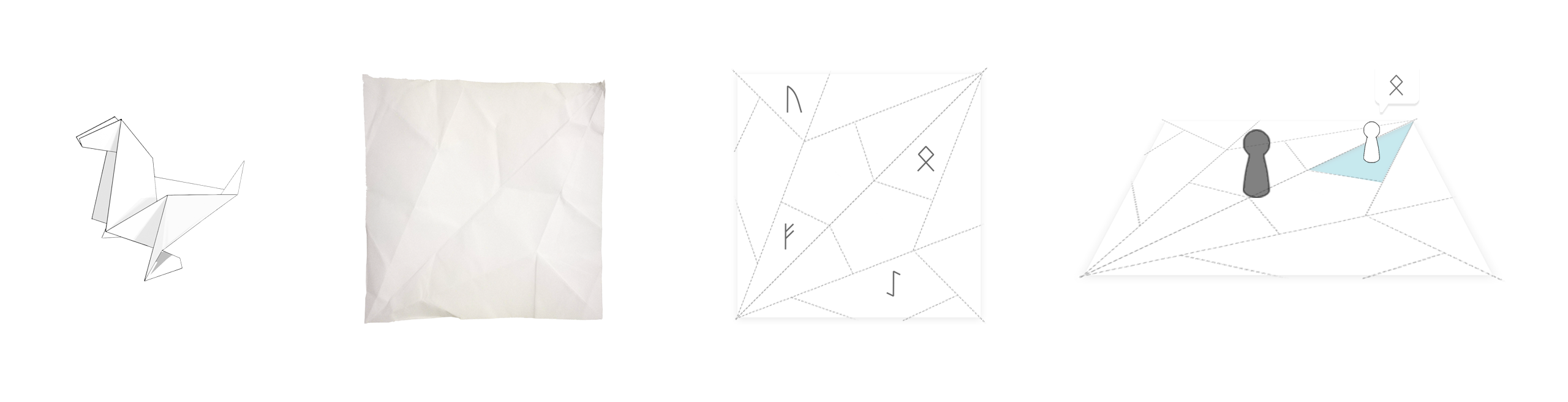
Player requires to solve a puzzle a to unlock, final chapter battles in game. A typical puzzle is again combination of power words, ingredients or keys to be used on certain sequence or places. This sequence is revealed through creating an origami piece through instructions explored in sub-chapters. On each fold player writes a power word on paper in real world. After completing and unfolding the origami piece, map for solving the puzzle is revealed. The sequence of instructions, and words are randomized to create unique map for each instance of the game.
Example Puzzle Chapter
- Game consist of chapters each chapters corresponds an origami piece, and chapters consists of sub-chapters each of one corresponds to fold-technique.
- During sub-chapter with different hints player learns origami by retrieving knowledge such as which fold-technique to be used, how many times and where. Player could replicate this information step to create origami piece.
- On certain steps, player are given some additional power words (as runes) for portal keys. On this case, the given rune needs to be written on indicated area before applying the fold.
- Completing the chapter, will result to complete the origami as well. However, to unlock next chapter, player requires to handle a boss fight. The boss fight room always resembles the unfolded paper of origami piece. On certain periods, boss stops and an area is indicated by color or light. On this time player should go to given area and cast the passing power word in given time.
- If player had replicated given fold techniques in real life, unfolding the origami should reveal the true power words, in that player could use true power word to cast the portal.
- Upon completing successful RPG boss fight with the combination of origami puzzle player defeats the boss and gains access to the new chapter. Along with learning an origami in real life.
Puzzle Generation Steps
- Description selected origami for the chapter as a composition of folding steps.
- Decision on which steps to write a power rune on fold.
- Writing of appropriate questline for each fold and rune to reveal map.
- Design of boss fight mechanics and space that bears resemblance of unfolded origami.
Theory
Environmental Interactions
As a general principle, it is aimed to increase the interaction with the environment for player. Environment is not only frozen entity to move and orient for next encounter but also, something to be aware of and act depending of the requirements of the place. Player should be able to change, alter or impact on the environment. At the same time strategicaly use it for personal progression.
Example cases:
- Frost based spells has multipliers to hit greater to wet enemies.
- Player should avoid using fire spells on environment with dry woods to create fire.
- Player should position themselves tactically to avoid impact boulder rolls, and even use this phenomenon to encounter with enemies.
Integrated Mini Games
One of the problems that I have encountered in online games, that crafted objects costs lesser than material itself. Which is often wrong compared to the real world. The problem is gathering costs labor, however crafting does not, as a result since the material has variety of usage it worth more. To compete with this problem. It is aimed to set alternative progression mechanics such as crafting to be supported by engraved mini games to include and value them in labor. On further extreme, who whole complex game could be considered as a composition of mini games too.
Example cases:
- Progressive casting mechanism given above.
- Lockpicking mechanism in Elder Scrolls series.
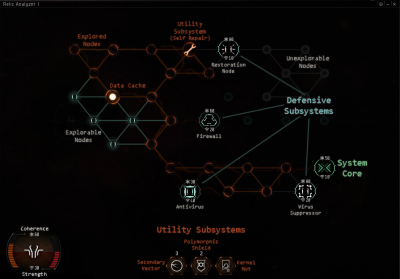
- Hacking in Eve Online.
Internal Learning Mechanism
The mechanic requirements to solve puzzles or progression is aimed to be engraved in-game as much as possible. Player should not progress with grind with frozen state of mind, but immerse him/herself in the game content and try to solve a problem to make a progress.
Example casees:
- Trolls could be killed by using fire spells learned through a book (Elder Scrolls V: Skyrim, 2011)
- On crafting, player must adjust the necessary conditions to create best possible variations of weapon. This information could be retrieved from someone, or something from ingame. To avoid duplication of the solution outside of the game. Given sources are randomized every game. On example, to forge a good sword, player should set the temperature to correct level. The level is described as a color of something (for instance a peach) ingame by someone or some text. Player should get a peach to compare colors to see correct level adjustment.
Technology and Skill Trees
Another factor to establish an immersive environment is to push player to think and theorycraft the problem space created in-game. To create this environment, I consider, technology, and skill trees are good method to create complexity and considering people to think over variances and new possibilities to play and interract with the game. However, I belive skills trees should not shadow the players control over the character. Fundamental success should still be binded to player.
Sub Systems
Time and Date
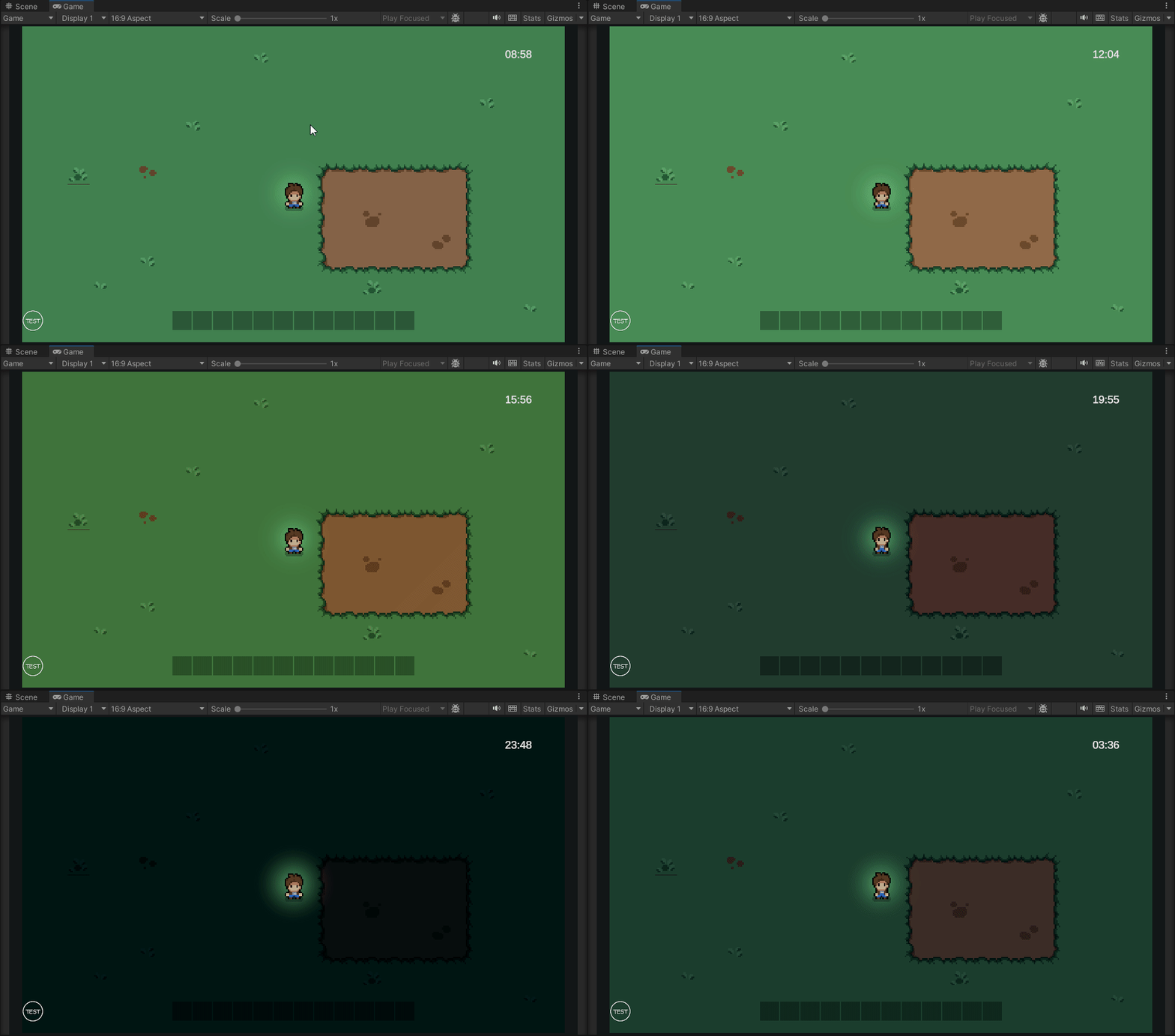
A time system tracks day/night cycles and calendar to set events. To bind sense of time to certain events such as puzzles or social/unique events ingame that enhances to create more surrounding environment in parallelity with the idea of Gesamkunstwerk.
Inventory
As a fundamental aspect of any role-playing game inventory system is aimed to include in Swapfold. To be able to progress on character, use of materials to create more powerful objects and increase environmental interaction.
Procedural Environment Generation
Describing environment as modules and computationally bind this parts to describe seamlessly transitive places. The idea is to create relatively unique experience on each seed, as well as preventing the rote progression.
- Example games using described system: Diablo series, Valheim, Don’t Starve
Controlled Randomization
- Map randomization: As a part of prodecural environment creation parts of the map is randomly customized
- Puzzle randomization: To prevent same written guide to pass the game without playing it. The fold hints are given randomly to form a unique form for each puzzle instance.
References and Credits
Visual References
-
Figure 1. Basic level origamis selected for each chapter. Figure produced by the author. 2023.
- Sampled From: Twitter: The Art of Origami. 2020. Accessed (10-Feb-2023) https://twitter.com/PaperFolding101/status/1249763477394161664
-
Figure 2. Fold and Power Word Asssociation on Skill Tree. Figure produced by the author. 2023.
- Sampled From: Ultima Online Spellbook. n.d. Accessed (14-Feb-2023) https://runuo.theabyss.ru/images/uokr/sitecontent/skill/mysticism/mystbook.jpg
- Sampled From: Elder Scrolls V: Skyrim Power Words. 2011. Accessed (14-Feb-2023) https://i.ytimg.com/vi/xBqg1N1taEk/maxresdefault.jpg
- Sampled From: Elder Futhark n.d. Accessed (13-Feb-2023) https://upload.wikimedia.org/wikipedia/commons/thumb/5/57/Anglosaxonrunes.svg/1024px-Anglosaxonrunes.svg.png
-
Figure 3. Spell Effect Change In Relation To Cast Periods. Figure produced by the author. 2023.
-
Figure 4. Periods of Cast Bar. Figure produced by the author. 2023.
-
Figure 5. Puzzle Solving Steps Depiction. Figure produced by the author. 2023.
Used Sources
- 3Blue1Brown. Visualizing quaternions (4d numbers) with stereographic projection. Youtube [Video File]. 2018. Accessed (12-Nov-2021) https://youtu.be/d4EgbgTm0Bgquartenions
- “Camera Obscura”. In Wikipedia. n.d. Accessed (25-Feb-2023) https://en.wikipedia.org/wiki/Camera_obscura
- “Chekhov’s Gun”. In Wikipedia. n.d. Accessed (25-Feb-2023) https://en.wikipedia.org/wiki/Chekhov%27s_gun
- DevDungeon. The Cookbook Method of Learning Programming Languages. Youtube [Video File]. 2016. Accessed (13-Feb-2023) https://youtu.be/8vmUTz6it5A
- Lucareilli, C.D.C., Carlo, J. “Parametric modeling simulation for an origami shaped canopy”. Frontiers of Architectural Research. In Researchgate. 2019. doi: 10.1016/j.foar.2019.08.001. Accessed (24-Feb-2023) https://www.researchgate.net/publication/335590540_Parametric_modeling_simulation_for_an_origami_shaped_canopy/figures?lo=1
- Pelley, M.E.Le. “The role of associative history in models of associative learning: a selective review and a hybrid model”. National Library of Medicine. 2004. doi: 10.1080/02724990344000141. Accessed (24-Feb-2023) https://pubmed.ncbi.nlm.nih.gov/15204108/
Game References
- Arrowhead Game Studios. Magicka. 2011.
- Spell Word Combinations. n.d. Accessed (15-Feb-2023) https://static.wikia.nocookie.net/magicka_gamepedia/images/6/6c/Magicka_Combinations.jpg/revision/latest?cb=20110128021330
- Bethesda Softworks. Elder Scrolls Series. 1994-2011.
- Lockpicking Mini Game. 2011. Accessed (12-Feb-2023) https://lparchive.org/Elder-Scrolls-IV-Oblivion/Update%2002/34-34-youcanhearitcantyou.png
- Blizzard Entertainment. Diablo Series. 1997-2022.
- CCP Games. Eve Online. 2003.
- Hacking Mini Game. n.d. Accessed (12-Feb-2023) https://wiki.eveuniversity.org/images/thumb/8/80/Hacking_Indications.png/400px-Hacking_Indications.png
- Scanning Mini Game. n.d. Accessed (12-Feb-2023) https://i.ytimg.com/vi/YoI4Kq_c-oc/maxresdefault.jpg
- Electronic Arts, Origin Systems, Mythic Entertainment. Ultima Online. 1997.
- Klei Entertainment, Blitworks. Don’t Starve. 2013.
- Iron Gate Studio, Fishlabs, Piktiv. Valheim. 2021.
- Valve Corporation. Portal. 2007.
Used Programs
- Adobe Photoshop CC
- Blender 3.4.1